
If you are thinking about adding a new garden path, improving an old walkway, or uplifting your driveway, you are not alone. Many New Zealand homeowners are looking for outdoor paving solutions that combine practicality with natural beauty. You may want a pathway that protects your garden beds during heavy rain, a driveway that feels welcoming, or a surface that is easier to maintain than concrete. Whatever your vision, a permeable paver pathway offers a smart, attractive, and sustainable option.
Permeable paving gives rainwater somewhere to go, reduces surface flooding, and adds a natural touch that suits every style of home. Natural Paving provides pavers designed with our unique climate in mind, making it easy for DIYers, landscapers, and homeowners to create natural stone paving that looks great and works to improve your environment.
This guide walks you through the full process of installing a permeable paver pathway using Natural Paving pavers. By the end, you will feel confident planning, preparing, and completing your own eco-friendly paving project.
1.Planning Your Permeable Pathway for Best Results
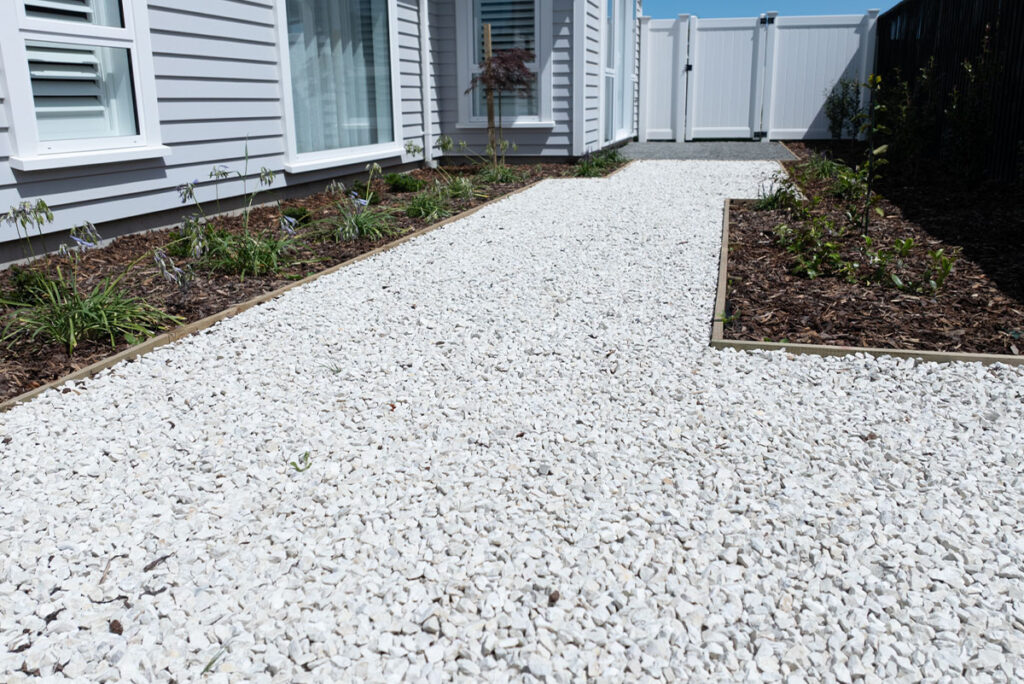
Before you pick up a shovel, planning is key. Good design ensures your pathway not only looks great but performs well in all weather. Start by visualising the shape of your pathway. Curves, straight lines, loops, or split paths are all possible, and Natural Paving mats can easily be trimmed to fit your design.
Next, consider how water will move through your garden. One of the main benefits of a permeable paver pathway is that it manages rainwater naturally, so you want to make sure it can soak into the ground or move towards a designated drainage area. Think about where excess water will go during heavy downpours. You may decide to guide runoff toward garden beds, lawn areas, or a drainage coil that connects to your stormwater system.
Also consider practical elements such as pathway width, future planting, how the space will be used, and whether you want lighting or edging that complements the look. This planning stage makes every step easier and ensures your project aligns with sustainable landscaping principles.
2. Preparing the Base for Long-Lasting Natural Stone Paving
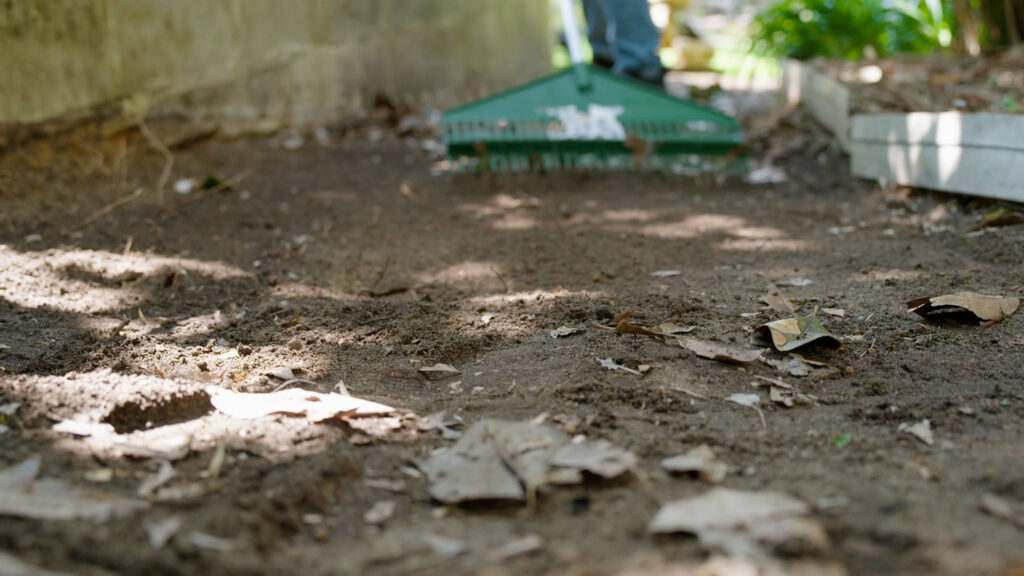
Base preparation is the foundation of a successful permeable paver pathway. It not only determines the durability of the surface by helping to reduce potholes and ruts, but helps maintain its eco-friendly performance.
Excavate to a depth suitable for your project. For pathways or patios with pedestrian traffic, aim for around 50 mm of basecourse. For driveways that will carry SUVs or the occasional truck, increase the depth by at least 100 mm. The goal is to reach a solid sub-grade such as clay or firm soil. It’s important to remove all organic matter, debris, tree roots, or sharp stones.
If your sub-grade is impermeable and cannot absorb water easily, contour it slightly so rainfall drains into a filter fabric wrapped drainage coil. You may need to excavate trenches or connect the drainage directly into your stormwater system. This supports good water flow and helps to protect surrounding landscaping.
Lay SureTex geotextile on the sub-grade to prevent soil migration and improve drainage. On top of the geotextile, spread no-fines basecourse layer and compact it thoroughly using a plate compactor. This creates a stable yet permeable layer that allows water to soak into the surrounding soil, enriching local root systems. Proper base preparation ensures your natural stone paving remains firm, level, and free draining for years to come.
3. Choosing Between Black and Cream Pavers for Your Design
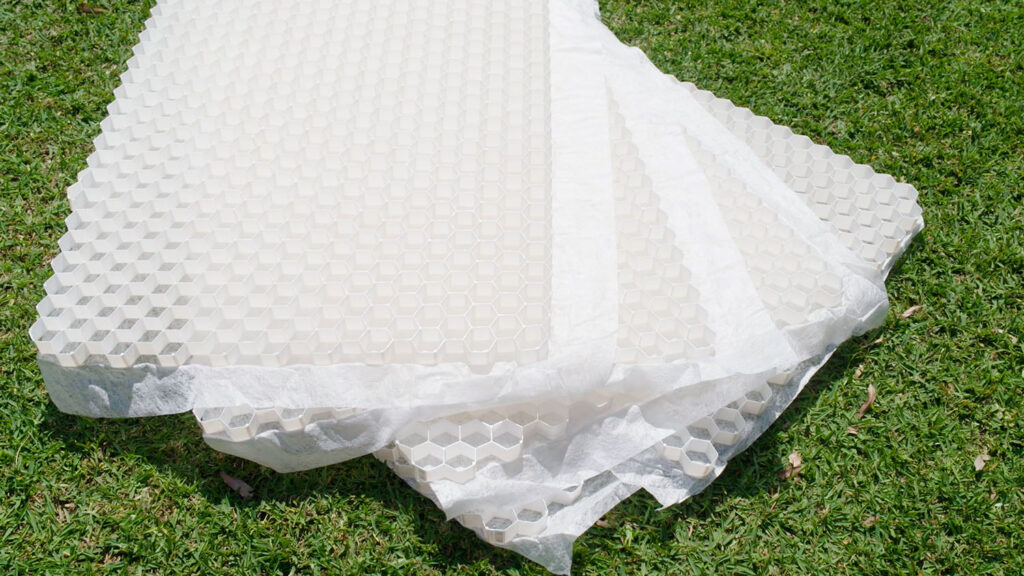
Natural Paving comes in two stylish colours: black and cream. Each option creates a distinct visual effect and can influence the overall mood of your outdoor space.
If you want a warm, inviting, rustic look, cream is the perfect choice. It blends beautifully with natural timber, soft planting, and cottage garden styling. For a sharp, modern and contrasting finish, black pavers offer a contemporary feel that pairs well with architectural homes, bold planting schemes, or minimalist outdoor spaces.
Although the pavers are designed to be covered with your chosen surface materials, small hints of colour showing through the stones will subtly enhance your finished look. Your colour choice is an important part of creating cohesive outdoor space and contributes to the overall charm of your permeable pathway design.
4. Installing Your Pavers and Creating Strong Edging
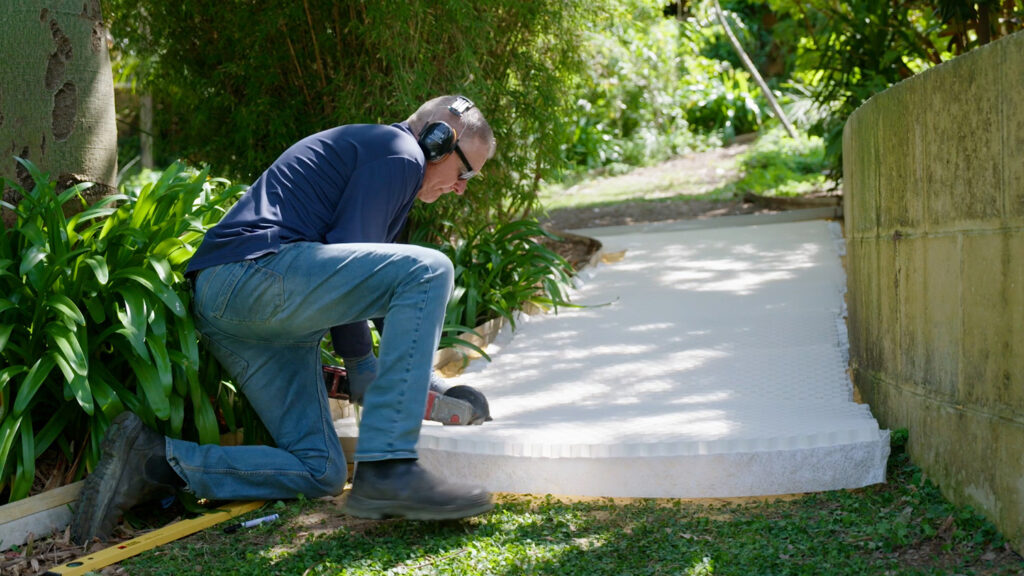
Edging is essential when installing a permeable paver pathway. It retains the stones, protects the edges of the pavers, and creates a clean line that is easy to mow along. Strol offers several edging options to match any style. PaveMaster is a low-height choice ideal for subtle borders. For a little more elevation, Link Edge provides a tidy and structured finish. If you prefer a more rustic appearance, Rustique Corten Steel Edging’s weathered patina blends seamlessly into natural landscapes.
With the edging in place, you can begin the bedding layer. Spread approximately 25 mm of AP7 or bedding sand over the compacted basecourse, screed it to match the final shape of your pathway, and compact lightly.
Next, lay the Natural Paving mats. These large sheets are easy to handle and come with a geotextile base designed to retain the pebbles and prevent weed growth. Each paver has two overlapping edges, allowing the next sheet to rest neatly on top of the previous one. Leave around 30 mm between the honeycomb edges so that the pebbles can settle naturally into the gaps.
You can cut the pavers to shape using a hand saw or circular saw. Offcuts can be used to fill small areas, making the system efficient and low waste. Natural Paving makes it simple to create free-flowing designs that fit effortlessly into your garden.
5. Filling Your Pavers with Pebbles or Gravel
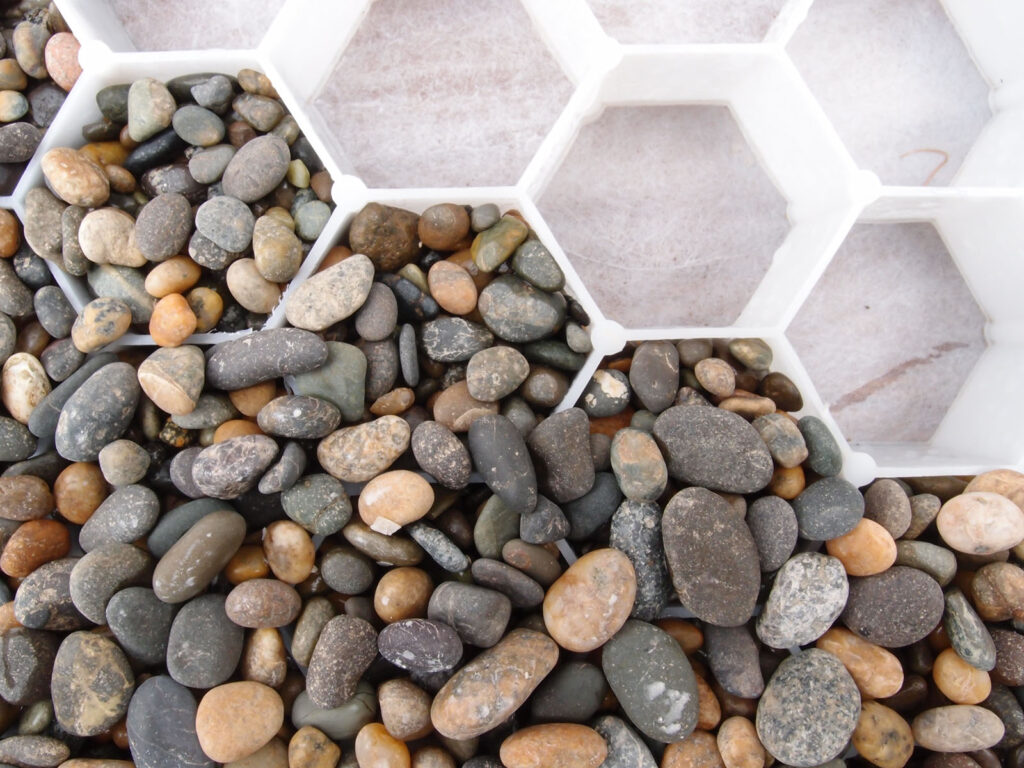
Once your mats are laid, it is time for the fun part: selecting and spreading your stone. Smooth pebbles or angular gravel between 3 and 16 mm work best. You can choose a single colour for a uniform look, or mix colours to create zones or artistic patterns within your pathway or driveway.
Spread the stones evenly with a rake or stiff brush. Fill the pavers approximately 20 mm above the top of the honeycomb. This may look quite full at first, but the stones will settle over time, leaving around 10 to 15 mm covering the pavers. This protective layer prevents UV exposure and keeps everything looking natural and tidy.
Your colour selection can completely transform the atmosphere of your outdoor space. Light stones brighten shady areas, while darker tones complement modern homes. The choice is yours, and all options support eco-friendly paving that suits New Zealand landscapes. You could even create two-tone areas to discern different pathways.
6. Adding Final Touches for a Polished Finish
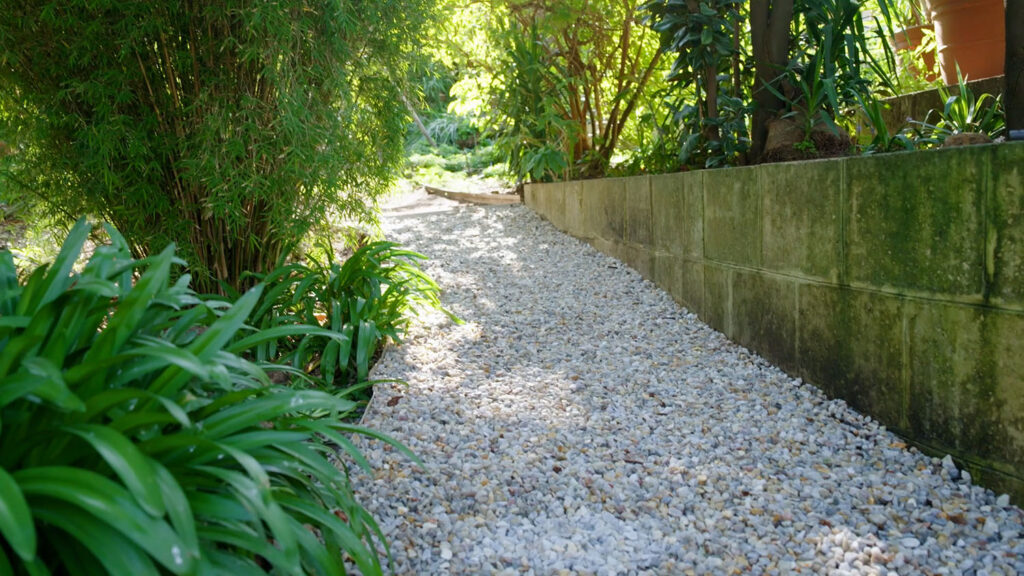
Your Natural Paving permeable pathway is almost complete. You can either compact the stones to speed up the settling process or allow nature to handle this over time as you walk or drive across the path. Any stray stones can be swept back into place with ease. The result is a pathway or driveway that looks polished while maintaining a soft, natural appeal.
Consider adding garden edging plants, solar lighting, or mulch around the path to enhance its appearance. These finishing touches contribute to the overall experience of your outdoor space and help your pathway feel perfectly integrated.
Every stage of this installation contributes to sustainable landscaping. Unlike concrete or asphalt, permeable paving allows rainfall to soak into the ground, as opposed to running off the impermeable surface in invasive sheets of fast-flowing water. This helps replenish soil moisture, support plant life, reduce stormwater runoff, and prevent surface pooling during heavy New Zealand rain.
The use of geotextile, basecourse, and drainage coils encourages efficient water movement and protects surrounding ecosystems. By choosing eco-friendly paving, you reduce erosion, support local biodiversity, and minimise heat reflection, creating a cooler outdoor environment.
A permeable paver pathway made with Natural Paving is not only attractive but also environmentally responsible. It is a practical choice for homeowners seeking garden path ideas that blend style with sustainability.